The Lovely Lorene

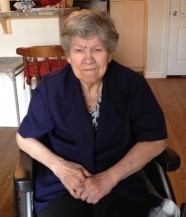
Scan_20150504Lorene Scott was born on November 22, 1926, in Meeker, Oklahoma,  to Rosa Mae and Benjamin Harrison Scott. She was their third child, baby sister to Kenneth and Mary. Later two brothers would be added to the family–Glenn and George.

The family moved to Arizona and Lorene grew up in Peoria. Like all families during the depression, the Scotts struggled to meet their daily needs. But strength and determination carried them through those trying times.

Attending Peoria High School, Lorene was the pitcher for the softball team.  With the team, she traveled the state playing against other high schools. She said that when her team played Jerome High School which was perched on the edge of Mingus Mountain, if someone hit a home run, the ball landed in Clarkdale, the town below.

As a teenager, Lorene had a job at the local drug store working at the fountain. Everyday, she rushed from school to get there before the other kids. Because she knew what each one would order, she had things ready when they arrived. Those who didn’t have any money ordered a pine float–a glass of water with a toothpick in it. Gene Autry, a western singer and movie star of the time, owned the juke box in the drug store. When he came in to change the records, Lorene asked him to remove “Tweedle o’ Twill” a song with lots of yodeling that drove her crazy. Gene Autry lifted the five-foot, ninety pound girl and set her up on the counter. Then he put a coin in the juke box and played “Tweedle o’ Twill.” But after that, he did take it out as Lorene requested.

On August 1, 1946, Lorene married George Owen Morgan. Two years later, their first child, Rosemary, was born in Phoenix. Shortly after that the family moved to Idaho, where George farmed with his brother Ed. As I was much too young to remember those days, I can only rely on what my mother has told me. Apparently I was a daddy’s girl, going out with my dad on his horse as often as he would take me.  My sister, Shirley, was born in Idaho, but soon after that we returned to live in Arizona.

In March, 1952, George and Lorene were expecting their third child. Unfortunately, little JoAnne passed away at birth. Saddened by the loss of their little daughter, George and Lorene supported each other and carried on. But just one month later, George was in the hospital for a surgical procedure. The procedure did not go well and a few days later, Lorene lost him as well.

So much loss in so short a time would be difficult for anyone. But Lorene had two small daughters to care for. Her parents supported her during that time and built a small house behind their own for us to live in. My earliest memories are of living in that house in Glendale. Lorene went to work at Co-op Dairy to support her family. It was there that she met Richard Ebersole. They were married and we all moved to Phoenix. After my brother, Rick, was born we moved to a larger house on Rose Lane and Eleventh Avenue. That was the home I grew up in.

Shirley was married in 1969, and I followed the next year. Our parents were looking forward to their retirement years when Richard was diagnosed with Leukemia. He passed away in March, 1971. Alone again, with just my brother left at home, Lorene had to call on her inner strength.

After twenty-seven years working for Carnation Dairy, she decided to retire. Taking her pension, she invested in a business. In spite of her hard work and determination, the business failed. But being the strong person she is, Lorene pulled herself together and found a job with Circle K. With her leadership skills, she soon became the manager of a store. She continued to work for Circle K until she retired at the age of seventy-five.

I feel fortunate to have such an outstanding role model in my life. My mother has always been a strong, independent woman. She has overcome so many tragedies, any one of which would have crushed a weaker person. But each time, she rose above the situation and stood on her own two feet, caring for her family with love and determination.     momTo me she will always be the lovely Lorene.

A Rocky Start: Chapter Two, continued

Image1-17_edited-1

The girls waved good-bye as they climbed on their bikes and rode away toward the pond. In the Bluesky Chamber of Commerce brochure, the pond is called Holiday Lake, but most of the people in town just call it the pond. After the winter snows have melted up north, the pond has quite a bit of water, but by the middle of summer, it is nothing more than a mudhole. The summer monsoon rains help refill it a little, but it is never large enough to qualify for lake status.

On that particular Saturday, the pond was full, with lush green vegetation around it. The girls liked to catch tadpoles and other “science specimens” that they put into Ziploc bags so they could carry them home. Laura liked to gather crayfish from the little stream that fed the pond. Her mother, who was from Louisiana, used them to make jambalaya. Amber took some home once, but her mother made her throw them away. She said that city girls got their shellfish at Red Lobster. They didn’t fish it out of irrigation ditches.

Amber’s mom liked to call herself a big-city girl because she was born and raised in Phoenix, Arizona. Amber’s dad lived in Flagstaff from the age of five. He never thought of himself as a big-city guy, and he never wanted to be one. Amber’s parents had met during their college years when they were both counselors at a summer camp in Pinetop. It was a camp for children with disabilities. After her first summer there, Mary thought about becoming a physical therapist, but she had already started on a business degree at a junior college, and she stayed with that. John was working on his degree in business management at Northern Arizona University.

After summer camp, they had a long-distance writing relationship until John finished college and moved to Phoenix. He asked Mary to marry him, and a year later, they were married. A year after that, Kyle was born. At first they had been happy in Phoenix, but John missed the pine trees and being outdoors. He couldn’t get used to the hot summers in the Valley of the Sun. That’s why when Kyle was three years old, the family moved to Flagstaff. John was happy to be back home, but after two unusually harsh winters, Mary convinced him that they needed to find a place with a warmer climate. That was when they moved to Bluesky.

In Flagstaff, John had been a department manager in the large Discount Mart. A smaller mart was being built in Bluesky, and he had the chance to be its manager. Mary was just getting her insurance license, and she was invited to join a new agency in Bluesky. With cooler summers than Phoenix and warmer winters than Flagstaff, Bluesky seemed like the perfect place to live. Before Kyle was ready to start kindergarten, the family made its move. Amber was born in Bluesky and never wanted to live anywhere else.

Bluesky sits in the middle of a large valley, almost completely surrounded by mountains. As its name suggests, the sky is a brilliant blue, interrupted occasionally by a few wisps of white cirrus clouds. Early in the morning, the sun, on its way up, tints the horizon with muted shades of lavender and apricot. In the evening, the setting sun brushes the sky with vivid reds and oranges, leaving just a hint of the colors after it drops behind the mountains. Bluesky is a small town with plenty of room to grow, though most of the people in town are happy with things just the way they are.

The water in the stream was a little cool, so the girls looked for creatures in the water without wading in as they usually did. After a while, they were tired of the pond and decided to ride their bikes around the park. When they reached the playground, they stopped to play on the swings and slides. Laura’s mom owned a ballet school where she taught gymnastics. Laura had been doing gymnastics since she was three years old, so she showed her friends some tricks she could do on the monkey bars. Amber and Melissa followed her lead as best they could. After that, they played a game of tag with some other children at the park.

The sun was high overhead when they decided it was time to go home for lunch. Amber said good-bye to her friends as they continued past her house on their bikes. She found her dad asleep in front of the television and her mom working on some paperwork in her office.

Amber’s mom looked up from her desk. “It must be time for lunch. How about tomato soup and grilled cheese sandwiches?”

“My favorite,” Amber answered back.

“What did you girls do this morning?” Mrs. Snyder asked as they ate lunch.

Amber filled her in on their visit to Mrs. Jenkins’s house and their adventures at the park.

“There are a lot of older people in Bluesky,” her mom said thoughtfully. “It must be hard for them to do the things they need to do. That was very nice of you to help Mrs. Jenkins.”

“She makes cookies that have a secret ingredient,” Amber told her. “We tried to guess what it was, but she wouldn’t tell us.”

“Maybe she will when she gets to know you better.”

“I don’t think so,” Amber said. “I don’t think she ever tells anyone.”

“Do you have any homework?” Mary asked her daughter.

“I have some math,” Amber said with disgust.

“If you finish it this afternoon, we can have a picnic after church tomorrow. How does that sound?”

“Can we grill hamburgers?” Amber wanted to know. She loved hamburgers better than just about anything.

“That sounds like a good idea.”

Amber took out her homework. It was fractions, which were hard for her, but she thought she remembered what her teacher told her about adding fractions. They had to have the same denominator. She looked at the example and started to work. In half an hour, she was finished.

Since she was doing homework, Amber decided to read her Sunday school homework. It was about finishing what you started. Amber knew she needed to work on that. It wasn’t that she meant to quit on things before she was finished, but sometimes she just got distracted. At the top of the page, she saw a Bible scripture from Galatians 6:9, “Let us not grow tired of doing good, for in due time we shall reap our harvest.” Amber hoped her harvest wouldn’t be spinach.

The Handy Helpers book series is available at Amazon

My Empty Nest


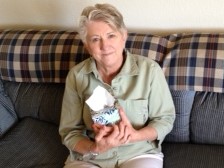
back cover pictureEvery challenge has its rewards, and every opportunity has its tradeoffs. One of the tradeoffs I had counted on was that Kirstin would always be with us. Michael was an independent young man at an early age, playing with his friends all day. When we moved to Prescott Valley he became an adventurer, exploring the creeks and hills around our town. In high school, now a licensed driver, he spent time with his buddies or worked at various part-time jobs.  He no longer accompanied us on family vacations.  After high school, Michael took a job with the U.S. Forest Service as a firefighter. At first he remained in Chino Valley, but he was soon transferred to other ranger stations in remote areas of our large state. Eventually, he got married and became a parent himself. He had gradually become less and less a part of our daily lives, but Kirstin was always there. She was with us every day and everywhere we went. Other parents had to prepare for having their children move away, but not us. While we knew Kirstin would have a life of her own in some ways, I always assumed she would continue to live with us.

The empty nest idea didn’t fully hit me for a few months. It was May and it was Mother’s Day. On any other Mother’s Day, Kirstin would have been parked outside our bedroom door, waiting for us to wake up and open the door so she could rush in present and card in hand. But on this particular Mother’s Day, there was no shuffling noise coming from under our door. It hit me like a ton of bricks. We were empty nesters. That was when the tears came.

As parents, Craig and I are as proud of Kirstin and her accomplishments as we are of our son Michael. They have both made their own way in the world as strong, successful, independent adults. Kirstin knows her own mind and will stand up for what she thinks is best for her (even to her overbearing mother). Letting go is a very difficult thing to do, and I don’t think we have fully mastered it yet. Maybe we never will. But Kirstin is always patient with us and helps us learn to be better empty nesters.

Kirstin’s Side of the Story:  I like being independent. Growing up means having a lot of responsibilities. I budget my money carefully. I have lots of bills to pay. It is not always easy being an adult. I’m a good cook. I keep my house clean. I am a good shopper.

All children have their families, even when they grow up. My mom and I play Pounce together, cook together, and spend time together. We don’t see each other every day, but that makes it more special when we are together.

From: This Little Light of Mine, A woman with Down syndrome shines brightly in the world. This book is available on Amazon

It has been over eleven years since Kirstin moved out of our home and into the mobile she shared with her grandmother. During that time, Kirstin has enjoyed her independence and grown into a remarkable adult. When we were helping her make decisions about what to do with her mobile home, there was a part of me that wanted so much to have her live with us again. But that wasn’t my decision to make. Kirstin has her own plans and dreams. Like all of us, she is working to make them come true. My role is to support her in this as I have always done.

A Rocky Start–Chapter Two

Image1-17_edited-1          Amber awoke to a beautiful spring morning with the sound of birds outside her window. She pulled back the curtain to look at the nest in the sycamore tree. Earlier in the spring, she had watched as two parents-to-be built their nest from pieces of dry grass and straw. The male bird was orange and black, and the female was black and yellow. Both birds had black wings with white stripes. Amber’s dad said that he thought they were orioles. But he took Amber to the library to get a bird book so they could find out for sure. After reading about all the different types, they decided the birds must be hooded orioles. The black face and orange head that looked like a hood kind of gave it away. In her sketchbook, Amber had drawn several pictures of the birds, some flying and some sitting on a branch.

In the nest, Amber could see five bluish-gray eggs with black specks. The male was sitting on the nest, but Amber knew that the two birds took turns. A few weeks after they had spotted the birds in the tree, Amber’s mom brought home an oriole feeder, which she hung in another tree in the backyard. Other birds used the feeder as well, but Amber could always pick out her pair.

The smell of pancakes brought Amber down to breakfast. Her mom made pancakes almost every Saturday. After breakfast, she would have to do her Saturday chores. This week, it was cleaning the bathrooms. Her mother always cleaned the kitchen and did the laundry. Amber, Kyle, and their dad rotated the other chores. Today Kyle had to vacuum, and Dad was dusting.

As Amber walked outside to begin pulling weeds in the front yard, she saw two girls on bikes, riding toward her house. As they came closer, she recognized her two best friends, Melissa Peterson and Laura Thomas. Both girls were dressed in jeans and T-shirts. Melissa was almost a foot taller than Laura and Amber. She had her long straight blond hair pulled back and held by a clip with a flower on it. Laura’s short brown hair was covered by a baseball cap.

Her friends left their bikes in the driveway and started across the grass to where Amber was. They were both pulling gloves out of their pockets and putting them on.

“We’re here to help you with the weeds,” Laura said. “Then maybe you can go with us to the pond.”

“I’ll have to ask my mom,” Amber said with a smile. “But I’m pretty sure she will let me.”

“What’s Kyle doing today?” Melissa wanted to know.

“He’s going to Fox Creek with some of his friends,” Amber told her. “He’s in there packing a lunch right now. I think he’s taking Domino with him.”

“Maybe we could go to Fox Creek too,” Melissa said hopefully.

“I know my mom would say no to that,” Amber shook her head.

“Mine too,” Laura chimed in. “Fox Creek is definitely out-of-bounds for me.”

About a half hour later, Amber pulled out the last weed from the front yard. She carried the bag of weeds over to the trash can.

“That didn’t take long at all,” Laura said.

“No, it didn’t,” Amber agreed. “I’ve got an idea. Yesterday, I met Mrs. Jenkins. She lives on Hope Street, and I was walking past her house when she asked me to get her newspaper out of the bushes.”

“She must have the same paperboy we have,” Melissa interrupted. “Derrick Carson. He always throws our paper in the bushes too.”

“Well, anyway,” Amber continued, “Mrs. Jenkins seems really nice, and I noticed she has some weeds in her yard. She couldn’t bend down to get her newspaper, so it’s probably hard for her to pull weeds. Maybe we could do that for her before we go down to the pond.”

Melissa and Laura both agreed that would be a good thing to do. After Amber checked in with her mom, the three girls got on their bikes and headed for Mrs. Jenkins’s house. They found her sitting in the glider on her front porch.

“Mrs. Jenkins,” Amber called out as she laid her bike down, “these are my friends, Melissa and Laura. We’ve been pulling weeds in my yard, and we thought you might like some help with your weeds.”

“That is a very nice offer, but are you sure that’s what you want to be doing on a fine Saturday morning?”

“It won’t take long,” Laura assured her. “And we love to help people.”

“In that case,” Mrs. Jenkins said, “I think I’ll take you up on your offer. That is, if you’ll have some lemonade and cookies with me when you’re done.”

“That’s a deal,” the girls responded with glee.

Amber, Melissa, and Laura started to work on the lawn, and Mrs. Jenkins went into the house. It hadn’t rained for quite a while, so there weren’t too many weeds. It didn’t take the girls long to finish. When Mrs. Jenkins returned, she was carrying a tray with a pitcher of lemonade, four glasses, and a plate of cookies. When Melissa saw her trying to get through the door with the tray, she ran over to help.

“Let me take that for you,” Melissa said. “Those cookies smell awfully good.”

“It’s my special recipe for chocolate chip cookies,” Mrs. Jenkins told her. “No one can ever guess my secret ingredient.” She told the girls to go inside and wash their hands. Then she poured the lemonade into glasses.

“These are the best chocolate chip cookies I’ve ever had,” Amber said. “What is your secret ingredient?”

“I can’t tell you.” Mrs. Jenkins smiled a sly smile. “Or it wouldn’t be a secret, would it?”

“We wouldn’t tell anyone,” Laura pleaded.

“Sorry, you’ll just have to try guessing.”

“Is it cinnamon?” suggested Melissa.

“No, any other guesses?”

“What about nutmegan?” added Amber.

“You mean nutmeg,” Laura corrected. “I think it’s something exotic like cardamom.”

“Good guesses,” said Mrs. Jenkins, “but you’re all wrong.”

For a few moments, everyone ate the cookies in silence. Then Mrs. Jenkins said, “The yard looks much better. I don’t know how to thank you girls. When my husband, Paul, was alive, he always took such good care of our lawn. If a weed popped up, he would snatch it out of the ground right away. I think the weeds finally gave up and decided not to grow in our yard. Since I’ve had to use this cane, I haven’t been able to keep up like he did. I hire a neighbor boy to mow the lawn once a month. That’s about all I can manage.”

The Handy Helpers book series is available at Amazon

Why I Cry

crying (2)I’m not ashamed to admit it–I’m a crier. Lots of things make me cry. I cry at the end of movies–sad ones and happy ones–even ones I’ve seen many times before. I cry when I see cute babies or puppies on Facebook. Even some television commercials make me cry. Seeing an elderly couple holding hands brings tears to my eyes. If they kiss, I’m a goner.

According to my mother, I was born with enlarged tear ducts. It was a condition that corrected itself over time and did not require surgery. It’s not likely that it has anything at all to do with the fact that I can cry at the drop of a hat. Anyway, I doesn’t explain the lump in my throat that accompanies the tears.

In her post entitled, “The Health Benefits of Tears,” (Psychology Today, July 27, 2010) Judith Orloff, M.D. had this to say about crying:

“Tears are your body’s release valve for stress, sadness, grief, anxiety, and frustration. Also, you can have tears of joy, say when a child is born or tears of relief when a difficulty has passed. In my own life, I am grateful when I can cry. It feels cleansing, a way to purge pent up emotions so they don’t lodge in my body as stress symptoms such as fatigue or pain. To stay healthy and release stress, I encourage my patients to cry. For both men and women, tears are a sign of courage, strength, and authenticity.”

Dr. Orloff went on to explain about different types of crying. Emotional tears are especially beneficial because they contain stress hormones that are excreted from the body through tears. It is also possible that crying stimulates the production of endorphins–the feel good hormones.

Almost any emotional situation can bring tears to my eyes. I recently watched a video showing people in Israel on Holocaust Memorial Day. At a certain time, a siren sounded all over the entire country. People who were driving on the freeway pulled to a stop and got out of their cars. Everyone stopped and stood silently. The siren lasted for a long time, but I continued to watch until it ended. Amazingly, I was dry-eyed until the end. But as the people were getting back in their cars, a felt a lump in my throat and tears ran down my cheeks. It reminded me of something that happened here in my own state of Arizona. Cars lined both sides of the highway and people stood next to their cars as the bodies of nineteen hot shot fire fighters, whose lives were lost in a forest fire, were being returned home for burial. I pray that I will always be moved to tears by such displays of love and respect.

Church is the place where I am most likely to be brought to tears. At every mass, there is something that causes me to cloud up–a scripture reading, words to a song, a heart-felt homily. I have never once made it all the way through “Amazing Grace.” At some point I just have to stop singing for a moment because no words can make it over the lump in my throat. If I don’t have tears in my eyes on the way to communion, the tears form on the way back to my seat.

Sometimes I am so moved that I want to cry out, but I try my best to hold it in. I wonder at times if I’m the only one. Are their others around me holding back tears? Do they look upon the image of our crucified Lord and long to throw themselves at his feet and cry like a baby? If I did that, would they join me or would they call an ambulance, thinking I was having a heart attack? I wonder.


A Rocky Start–Chapter One, Continued

Image1-17_edited-1

Mary Snyder, Amber’s mom, called to her from the sliding glass door. “Oh, Amber, you’re doing such a nice job. Why don’t you quit now and wash your hands? You can set the table for dinner in about half an hour.”

As Amber walked through the living room, she saw Kyle and their father, John, watching the ball game. Kyle had changed out of his baseball uniform and was wearing shorts and a T-shirt, but her dad was still dressed in the dark-blue pants, light-blue shirt, and dark tie that he wore to work. He had loosened the tie, which was now draped around his neck.

“Hi there, Fred,” her father said as she came in the room.

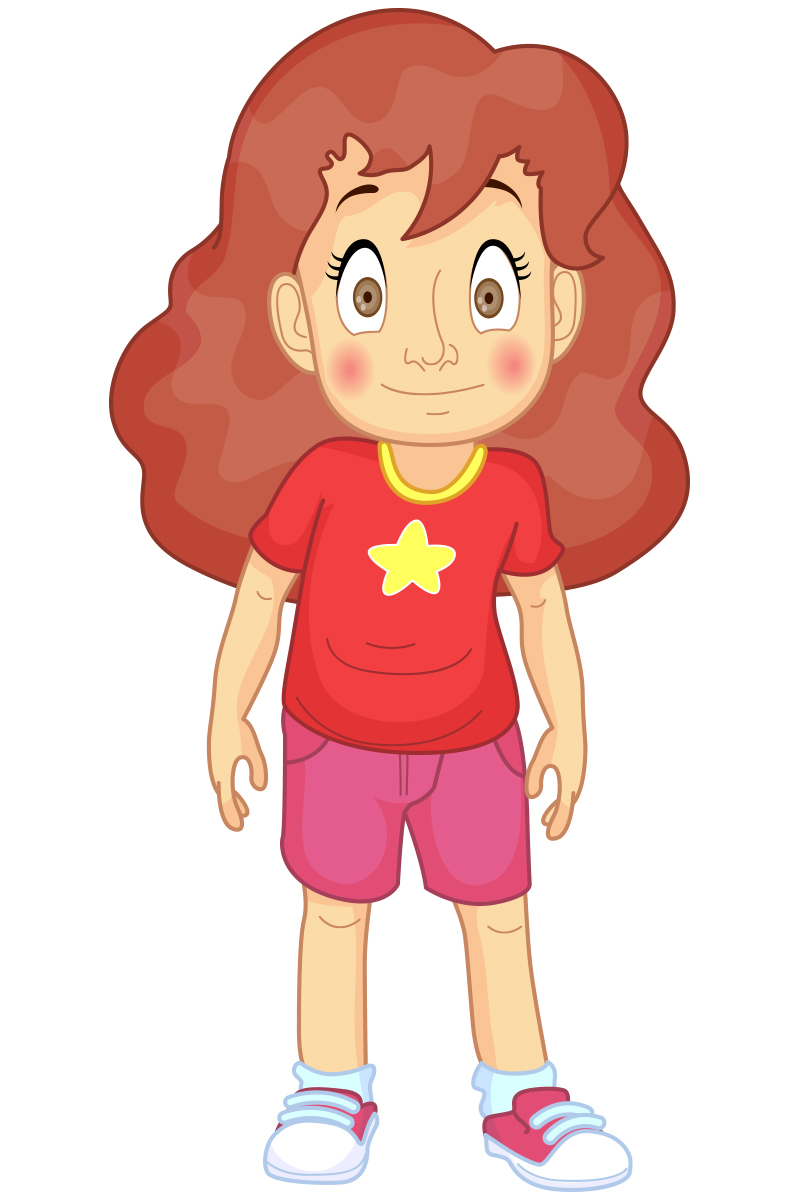
That was what he always called her ever since she was born, and her mom named her Amber Nicole. Her dad had said, “She looks like my Uncle Fred.” It was true that in her baby pictures she was kind of red and wrinkly and didn’t have much hair, but she didn’t think she looked like Uncle Fred. Anyway, now that she was ten years old, she had thick bronze-colored hair that sparkled red in the sunlight and thoughtful brown eyes. The wrinkles had smoothed out into peaches-and-cream skin. Amber looked more like pictures of her mother when she was young than pictures of Uncle Fred.

The Snyders were having meat loaf and mashed potatoes for dinner along with carrots. Amber liked carrots better than broccoli or cauliflower, but she was really glad they weren’t having spinach. She couldn’t imagine why anyone wanted to eat that slimy, stringy, foul-tasting green stuff.

“Anything interesting happen at school today?” Mary Snyder directed her question to both of her children at the dinner table.

“It was a short day,” Amber said with a sigh. “Nothing interesting ever happens on short days. We just do what we have to do and go home.”

“Well,” Kyle said enthusiastically, “I took a biology test today. I’m pretty sure I aced it.”

“That’s nice,” Mrs. Snyder told him. “What about you, dear?” turning her attention to Mr. Snyder. “How was your day?”

“It was a pretty ordinary day,” he said, “except the antelope got in the garbage again. They spread it all over, and I had to send three people out to clean it up. My employees tried making a lot of noise to get them to leave, but the nosy antelope just came closer to see what was going on.”

Although everyone in town calls them “the antelope,” they are really pronghorns, according to Amber’s teacher, Ms. McGuire. The pronghorns live in the grassy sections in the middle of town. They look beautiful with their elegant necks and stately horns. When they are frightened, they raise the hair on their rumps to present a dazzling white warning that can be seen for miles. Pronghorns are the fastest animals in North America, but they are not very good jumpers. The citizens of Bluesky often see them going under fences, and several times a week, the traffic comes to a stop as they cross a street.

The pronghorns graze alongside the cattle owned by the Fontaine Cattle Company. Before there was a town called Bluesky, the whole area belonged to the Fontaine family. They have raised cattle on this land for more than a hundred years. In the 1970s, the Fontaines decided to develop some of their land. The first homesites were intended for summer cabins built by families from Phoenix who wanted to get away from the heat. The lake and community horse corrals were added to make country living more attractive to the big-city folks. As the nearby towns started to grow, more people bought lots in Bluesky and built homes to live in all year-round because housing was cheaper there. Basically, there were two types of families in Bluesky: families with young children like Amber’s and retired people. Although the two types of households tried to blend in together, sometimes there was friction. The senior citizens weren’t always patient with the noisy kids running around the neighborhood. Some of the kids tried to stay out of their way, but that wasn’t always possible.


Amber was happy about two things that evening. The first was that Friday night was her dad’s turn to do the dishes. The second thing was that it was game night. If it had been her turn to choose the game, she would have chosen the Game of Life that her grandparents had just given her for her birthday on March 22. Unfortunately, it was Kyle’s turn to choose, and as usual, he chose Monopoly. As soon as the table was cleared, he set up the board and started counting out money for each player. Kyle liked to be the banker.

As usual, Kyle bought Boardwalk and Park Place, which he built up with hotels. Amber owned some properties, but not any sets, so she couldn’t buy houses or hotels. Their dad owned one of the railroads, but Kyle owned the other three. Mom had a utility company and some properties with houses on them. Amber kept landing in jail, and Kyle had the “Get out of jail free” card. After hitting Boardwalk or Park Place three times in a row, Amber was bankrupt.

“I’ll loan you some money,” Kyle offered.

“Yeah, with high interest,” Amber shot back.

“Of course,” Kyle said, rubbing his hands together.

“I’m kind of tired,” Amber told her parents. “I think I’ll go to bed early. There are lots of weeds waiting for me in the morning.”

“Okay, sweetie,” Mom said. “Get a good night’s sleep.”

“I guess you don’t need me to rock you to sleep, do you, Fred?” Dad said that almost every night.

Amber kissed her parents and went upstairs to her room.

When Amber closed her eyes to go to sleep, behind her eyelids she saw weeds, weeds, and more weeds. She noticed that her arms were a little sore, and when she stretched out her legs, she felt her muscles tighten, probably from crouching for so long.

Amber’s mom came in to check on her. “You did a nice job in the backyard,” she said. “You accepted responsibility for leaving the trash out, and you didn’t complain about having to pull weeds. I’m very proud of you. So are your dad and brother.”

“Kyle,” Amber questioned, “proud of me?”

“I think he’s even sorry he beat you so badly at Monopoly.”

“No, he’s not,” they both said at the same time. Then they laughed.

The Handy Helpers book series is available at Amazon


To my friends around the world

world pictureIn 2014, I had visitors from 9 countries and I was so excited about connecting with friends around the world. So far in 2015, I have had visitors from 34 countries: United States, Brazil, Italy, Portugal, Philippines, India, Switzerland, Russia, Indonesia, South Africa, Peru, Sri Lanka, Argentina, Taiwan, Chile, Mexico, Spain, Venezuela, Qatar, Mozambique, Israel, Norway, Thailand, Colombia, Belgium, Trinidad and Tobago, Egypt, Estonia, Georgia, Hong Kong SAR China, Romania, Netherlands, and Morocco. Nearly 300 of the 440 visits have been from the United States, but I’ve had 65 visitors from Brazil and 11 from Italy.

This all seems overwhelming to me and I can’t help wonder how you are finding your way to my blog. Most of my visitors from the United States come to  me through Facebook, but visitors from other countries are finding me through other links. I would love to hear from you and I hope you will let me know how you found me.

It’s amazing to think how technology has brought the people of the world closer together than we could ever imagine. First satellites allowed us to speak to each other no matter how far apart. Now the internet brings us even closer. With Skype, we can talk face to face as if we are in the same room together. It is my hope and prayer that as we are drawn closer and feel more a part of each other, we can find common ground and come to understand each other better.

My purpose in writing the Handy Helpers books is to show that  young people, older people, and people with special challenges have much to contribute to our world today.   I sincerely hope that you are being drawn to my blog because you feel the same way. The young are our future, but they don’t have to wait until they are adults to help make our world a better place. The elderly represent the past, and they have a great deal to share with us. We must treasure them. They honor us by the way they continue to guide and help us. Those with special needs are our heroes. They struggle to overcome obstacles that most of us can’t even imagine. And they do it with smiles and cheers and love.

I feel so blessed to be able to reach out to all of you in this way. I would love comments from you, questions, anything to get a dialog going. May God bless all of your lives. And if you are drawn to my blog again sometime in the future, I pray that you will find food for thought and food to nourish your soul.

A Rocky Start–Chapter One

Image1-17_edited-1

Amber kicked at a rock and watched as it rolled from the sidewalk onto the street. “Grounded,” she said under her breath. She had been looking forward to this day all week. It was an early-release day at school, and it was Friday. Amber and her friends had a fun-filled afternoon planned, but now it was all ruined.

“Grounded,” she said again and kicked another rock. Not even really grounded; not the way her friends were grounded. They just lost their television privileges or had to live without video games for a few days. Her mom took grounding seriously. She called it “Paying your dues for your don’ts.” What that meant was mistakes came with consequences.

This time her mistake had been forgetting to finish emptying the trash. She had taken the bag out like she was supposed to and tied it with a twist tie. Then she had gotten distracted by the music she heard on the TV and went into the family room to watch her favorite commercial. By the time it was over, she forgot about the trash. After she left for school, her ten-month-old black Lab, Domino, found the trash bag. He dragged it out through the open sliding glass door and spread trash all over the backyard. Before she left for work, Amber’s mom made sure Domino was outside and started to lock the sliding door. That’s when she noticed the backyard looked like a blizzard had hit. First she saw white, and then when she realized it was trash, she saw red!

All dressed up in a skirt and heels, Amber’s mom had to go outside and collect the trash that was stuck in every bush and lawn chair in their backyard. When she was finished, her makeup was running and her hair was hanging in her face. Since she was already late for work as an insurance agent, she didn’t have time to change her clothes. By the time Amber’s mom got home from work, she was calmed down, but she’d had plenty of time to figure out the most appropriate way for Amber to pay her “dues.” Today she would be pulling the weeds in the backyard, and tomorrow morning, she would be working in the front yard.

“Excuse me, little girl.” Amber looked up to see who was calling. Then she noticed a woman with white hair, leaning on a cane in front of the house she was just passing. “Excuse me,” the woman said again, and Amber realized she was talking to her.

“Do you need some help?” Amber called back to the woman.

“Yes, I do,” the woman explained. “I’m trying to get my newspaper out of the bushes, but I can’t bend down far enough. Would you mind getting it for me?”

“I’d be happy to.” Amber started across the lawn toward the woman.

As Amber handed her the newspaper, the woman introduced herself. “I’m Betty Jenkins. I’ve seen you walk by here before. Do you live on this block?”

“I live on Sycamore Street. It’s just one street over. My name is Amber Snyder.”

“Nice to meet you, Amber, and thanks so much for your help.”

“Nice to meet you too.” Amber smiled and walked back to the sidewalk.

When Amber got home, she found a note from her mom and a peanut butter sandwich. The note said:

Have a snack. There are gloves and trash bags on the counter. See you at four.  Love Mom.

Amber poured herself a glass of milk and sat down at the kitchen table to eat her peanut butter sandwich. She thought about turning on the TV but decided not to. It was watching TV that had gotten her in trouble in the first place. Amber put her dirty dishes in the dishwasher and went upstairs to change into some old clothes. Ten minutes later, she was grabbing the gloves and bags and heading for the back door.

As Amber started to go outside, Domino put his clumsy paws on the sliding glass door. His nails clicked against the glass as he tried to stand on his two hind legs. “Get down,” Amber yelled at him. “I can’t open the door.” Domino licked her hands as she walked outside, his tail wagging a friendly hello.

The Snyder backyard was a sort of memorial to the family’s unfinished dreams. A pile of rocks in one corner was all that remained of her father’s attempt to build a fountain. Two years ago, he had come home with his pickup truck full of decorative rocks that were on sale at the Discount Mart where he is the manager. His plan was to dig a hole and put in a basin to receive the water as it tumbled down the rocks of the fountain. The pump he planned to install would pump the water back up so it could tumble down again. He had carefully drawn plans for the project, but unfortunately, he never seemed to have gotten around to finishing it.

In another corner were the remains of a garden her mother had planted last fall. Grasshoppers were unusually plentiful that year. The giant insects seemed to be everywhere, chomping down anything that was green. Her mother soon gave up in despair and stopped watering the leafless skeletons, which were all that was left of her broccoli, cauliflower, and spinach. Amber pretended to be disappointed, but secretly, she was happy to have the grasshoppers eat her share of the gross-tasting spinach.

In the middle of the yard was a fire pit her brother, Kyle, dug last summer so he and his friends could roast marshmallows. He had used some of their father’s fountain rocks to build a ring, but now the rocks were pretty much spread around in the yard. Domino had been responsible for some of the backyard mess as well. He had displaced many of the rocks with his nose or paws in his efforts to catch a crafty lizard, not to mention the many digging projects he had started around the yard.

On one side of the yard, near the patio, was Amber’s splash pool, which had been drained and leaned against a wall. Wind must have blown it down, and rainwater had collected in the bottom. She hadn’t used it as a pool for the past two summers. Mostly, she and Kyle used it to hold “specimens” they captured from the pond in the park at the end of their street.

By the time Amber began pulling weeds, it was almost three o’clock. That meant an hour of weed pulling before her mother came home. She started with the little weeds, thinking that they would be easier, but Amber soon realized that the bag wasn’t filling up very fast. Switching to the bigger weeds meant a little more pulling, but the results were more dramatic. Maybe if she did a good job today, her mom would let her off tomorrow. It wasn’t too likely, but she could always hope.

“Well, if it isn’t the wacky weed whacker.” Amber didn’t even have to look up to know it was her brother, Kyle.

“No baseball practice today?” she asked, still not looking up from the weeds.

Kyle plopped down in a plastic chair on the patio. He took out his phone and started texting as he talked to Amber. “Yeah, we had practice. This was early release, remember? Oh, I forgot you were let out of school early so you could do your community-service weed pulling.” Kyle laughed.

Amber figured that most little sisters weren’t crazy about having a big brother, but having a big brother like Kyle was the pits. Being older, Kyle got to do anything he wanted, which of course he rubbed in. What made it worse was that Kyle was good at everything. He always got perfect grades in school without even studying. He was the catcher and the best hitter on the freshman baseball team. Besides that, he played the guitar in a band with his friends. Now that he had baseball practice every day, he wasn’t doing much with his band, but when baseball season ended, Amber knew he would once again be spending his evenings in his friend Spencer’s garage.

Amber was lucky to get average grades in school. She tried, but because of her attention-deficit/hyperactivity disorder, which everyone calls ADHD, she had a hard time paying attention in class. Kyle teased her about everything, but mostly about the ADHD. He said that it stands for “Amber’s dramas happen daily.” It was true that Amber made a lot of mistakes and forgot to do things, like the time she was getting a Popsicle out of the freezer. To reach the Popsicles, she had to take out a pound of hamburger, which she forgot to put back in the freezer. By the time her mom found it, the meat was defrosted and had to be thrown away. The cost of the meat was deducted from her allowance the next week. “Everyone makes mistakes,” her mom told her. “And we all have to learn from our mistakes. Unfortunately, there are also consequences. Those are the dues we pay for our don’ts.” The doctor gave Amber medication that helped with the ADHD, but it still seemed like she forgot to finish things more than she should.

Kyle played with Domino for a while, throwing a ball, which Domino ran after and returned. Then he and Domino went in the house. A few minutes later, Amber heard the television. She could tell that Kyle was watching a baseball game.

The Handy Helpers book series is available at Amazon

An interview with Amber Snyder

AmberVeronica Lyons here from Marshallville Daily News. This week we’re talking with kids who are making a difference in their communities. Today I’m speaking  with ten-year-old Amber Snyder. Amber is a member of the Handy Helpers, a group of children who assist the elderly in the town of Bluesky. Thank you for joining us today. How are you?

Amber:  I’m a little nervous but I’m happy to be here.

Veronica: Tell us a little about the Handy Helpers and what you do.

Amber: The Handy Helpers are kids like me who help at the senior center. We do some yard work and set the table for lunch. Sometimes we even help clean the kitchen. We call that KP duty.

Veronica: Are you organized like a club or do you just show up to help when you want to?

Amber: We are like a club. We have meetings every Monday. Logan is like the president. He wasn’t actually elected, but he’s really smart and organized. He’s a good leader.

Veronica: Do you just help at the senior center or do you help seniors in other ways?

Amber: We like to help seniors in any way we can. Sometimes they need help watering their plants or sweeping the porch. We’re always ready to help.

Veronica: How can seniors contact you if they need assistance?

Amber: We have posters around town to let people know we’re available. The best way to contact us is to call Walt at the senior center. He gives us our messages at the Monday meetings.

Veronica: How many members do you have?

Amber: There are seven of us, four girls and three boys.

Veronica:  Handy Helpers is a clever name. How did you come up with it?

Amber: At first, it was only the three boys helping at the senior center. They were Three Handy Guys. Then when my friends, Melissa and Laura wanted to start our own group, we called ourselves the Happy Helpers. After a while, we decided that we could help more if we worked together. That’s how we became the Handy Helpers.

Veronica: Well, I’m sure the people in Bluesky really appreciate all that you do. What do you like best about being a Handy Helper?

Amber:  I like helping, of course. But what I really like most is getting to know the seniors. They are so fun to be with. Sometimes they dress up in goofy costumes. They like to tell jokes and do fun things. They’re also good listeners when you have a problem.

Veronica: It sounds like you have made some very good friendships with the seniors in your town.

Amber: Yes, I have. They are my friends–Like Gus who always says, “See you later alligator,” and Betty who makes the best chocolate chip cookies you’ve ever eaten.

Veronica: Well, I make pretty good chocolate chip cookies. Are you sure Betty’s are the best?

Amber: Yes, they are. They have a secret ingredient.

Veronica: What’s the secret ingredient?

Amber: I can’t tell. I promised.

Veronica: You can whisper it to me. I won’t tell anyone.

Amber: I’m sorry. I can’t do that.

Veronica: Well, you’re a very loyal friend. I’ve enjoyed talking with you Amber. Good luck with your Handy Helpers group.

Amber: Thank you, Veronica.  I’m happy I could be here and talk about the Handy Helpers.


Beginning Friday, April 10, and continuing every Friday, the first Handy Helpers book, A Rocky Start, will be presented in serial form. I hope you will make it your Friday read.

The Handy Helpers book series is available at Amazon


Moving out . . . Moving on.

kirstin's new homeOn March 28, we moved Kirstin out of her mobile home which, until a year ago, she shared with her grandmother. The park her home is in will be closing, so selling it was necessary. It was much too big for Kirstin to keep up anyway. Now she is living comfortably in a one-bedroom apartment in Prescott Valley, only a short drive to where her grandmother lives in a care home.

kirstin in the kitchenBecause the mobile was the last place my mother lived independently, most of her possessions were still there. Anyone who has had to move elderly parents out of their home knows it is an unpleasant task–dismantling someone’s life, bit by bit and deciding what to do with it all.  I had a month to complete the move and so it seemed challenging but doable. At first I tried sorting through and making decisions about what to keep, give to other family members, sell, or give away. I even had a yard sale to get rid of some of the excess stuff my mom had acquired over her lifetime. (I found twelve coffee makers and a whole box full of irons.) But in the end, as time grew short, I resorted to rounding up boxes and hauling things off to my house to go through later.

When moving day finally arrived, we began putting furniture and boxes into the twenty-six-foot U-Haul truck. (My son, Michael, thought we didn’t need such a large truck, but we filled every inch of it.) First we dropped off the furniture that would have to be stored in my garage. Then we took Kirstin’s furniture and boxes to her new apartment.  It was eight o’clock at night, when we finished, but the biggest part of the move was accomplished.

My euphoria over finishing the move only lasted until I returned to the mobile for what was left. After countless more trips with my car loaded down and three trips with our pickup, everything was finally out.  Now all that remains is dealing with the furniture that is taking up most of my garage, (I did manage to leave enough space to squeeze my car in.) and the 500 square feet of boxes in my basement. I hope I can accomplish that before I go into a care home myself.

The process of moving my mother gave me cause to think about my own future and how I want to leave things for my children to deal with. These are some of my thoughts. I hope they will be helpful to some of you.

  • If you treasure something, pass it on to a younger family member. Tell the story behind it–how you came to own it, why it’s special. In that way, it will become a family heirloom instead of another item in the Goodwill donation box.
  • If you are no longer using something, get rid of it–Give it to someone, sell it, donate it, throw it away. It could still be useful to someone. Don’t leave it to collect dust in your home.
  • Be selective about what you save. Keeping every birthday card you were ever given may seem thoughtful. But if you don’t enjoy reading the cards over and over, no one else will either. No matter how large your collection, it won’t make it into the Hallmark Hall of Fame. Keep what matters–pictures and special memorabilia–throw out the rest.
  • Make your life about people rather than possessions. Instead of giving your loved ones another knickknack to sit on a shelf, consider spending time with them. Take them to a museum or a park. Read a book together or watch a movie.  Go through old photo albums and recall family stories. The time you give will mean so much more than any gift you could think of.

In a book I’m reading, Life’s Greatest Lesson, by Allen R. Hunt, Grandma Lavish says that we should prepare for death, not fear it.  Today, we are writing the stories that will be told at our funerals. We have the chance now to decide how we want our story told. In the end, those stories are all we take with us from this world–and all we leave behind.


Written by Rosemary Heddens