My Husband–My Hero

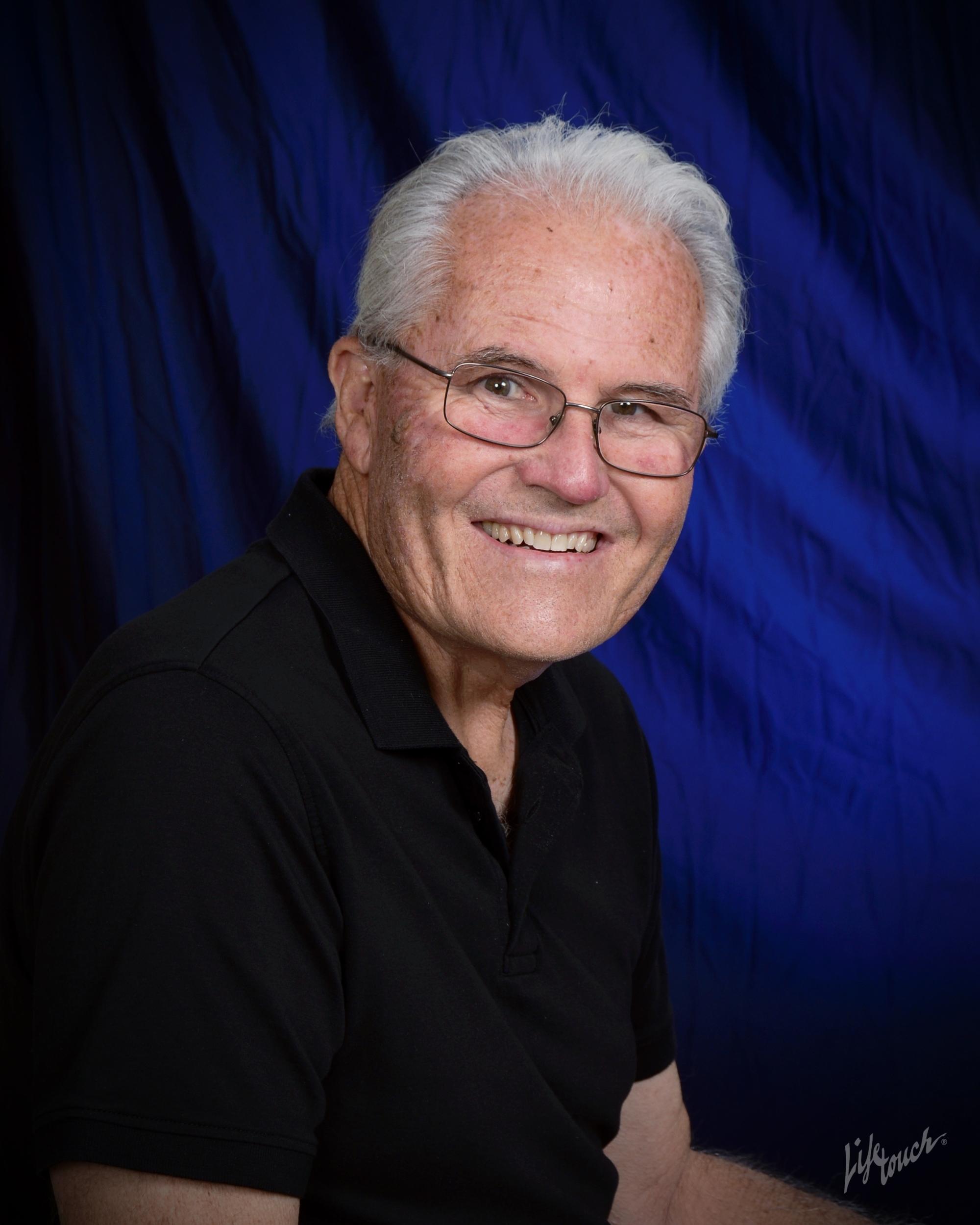
82539460F022Today is Craig’s sixty-ninth birthday, so I decided to dedicate this week’s post to him.

Craig was born in Mason City Iowa. His father, Donald, was the son of an Iowa farmer. Donald served in the army  and returned from World War II to become an accountant. Shortly after Craig was born, his father contracted Polio as many people did at that time. Craig also had polio. I can’t even imagine the torment his mother, Mary, went through knowing that her whole family could be wiped out by that disease. Donald did pass away, but Craig recovered.

When Craig was three years old, his mother moved them to Phoenix,  Arizona. In time, all of Mary’s brothers and sister moved to Arizona as well. When Craig was nine years old, his mother married Rex Farley and they purchased a home on Stella Lane.  Soon Craig’s brother Kevin was born, followed thirteen months later by his brother Mark.

In high school, Craig developed (no pun intended) an interest in photography–taking sports photos and photos for the yearbook. That was how we met. We were both seniors at Washington High School. I was in lots of clubs which gave Craig plenty of opportunities to take my picture. It is not surprising that I am in our senior yearbook so many times.

Craig was able to turn his love of photography into a career. He worked as a school photographer and a wedding photographer. Later, he became an aerial photographer, flying all over the valley shooting pictures through a hole in the bottom of the plane. He is responsible for many of the murals you see in museums.

Throughout his working years, Craig has owned many businesses–a Circle K franchise, Radio Shack, video store, satellite installation, and low voltage contracting.  This required him to work far beyond the typical forty-hour week. In spite of that he was always able fit in time for his family and community. In addition to camping trips and family vacations Craig was involved in all our children’s activities. He helped build and operate the bicycle motocross track in Chandler. He coached Little League and helped with Boy Scouts.

Craig has been involved in every community we have lived in. In Chandler, he was the president of the Chandler Jaycees and later the Arizona Jaycees. He was the chairman of the board for the MARC Center in Mesa–an organization for children and adults with cognitive challenges. In Prescott Valley, he was an assistant to the Scout leader and president of the church council. He also assisted with Special Olympics. Since we moved to Chino Valley, Craig has served as an eucharistic minister at our church. He was also the sponsor of Prescott Oasis–a self-advocacy group for adults with disabilities.

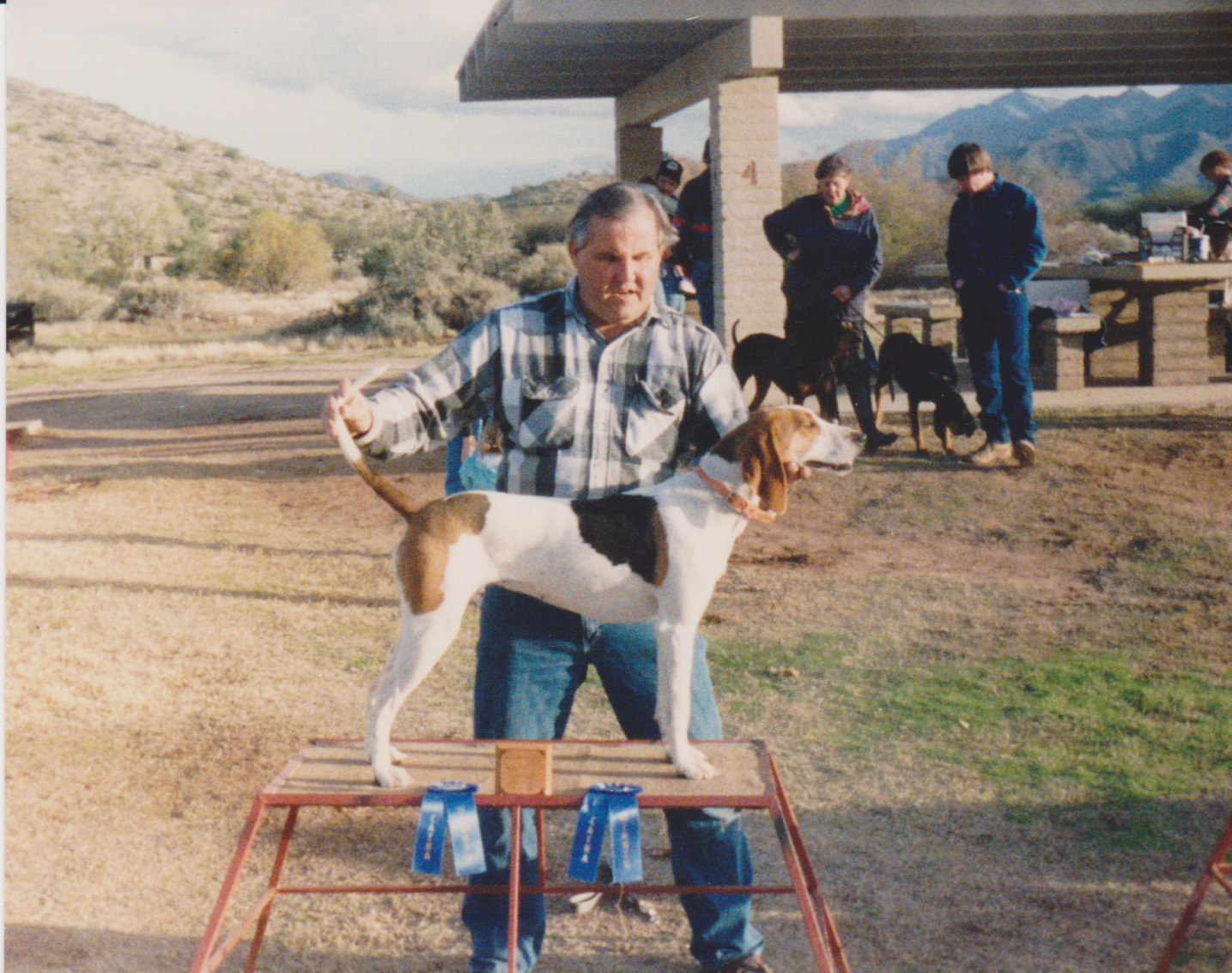
A longtime hobby Craig has enjoyed is raising and training treeing Scan_20160330walkers. He has entered them in competitions around the state of Arizona as well as California and New Mexico. His dogs won countless awards for field trials, water races and bench shows. He was a certified bench show judge for many years with the United Kennel Club.
Now retired, Craig continues to be a loving, supportive husband, father and grandfather. An avid hiker, he has traveled most of the trails in our beautiful Arizona highlands. For me, he has always been and continues to be my soulmate and helpmate. I’m so thankful for the years we’ve had together and look forward to those remaining.

 

Mr. Pritchard’s Peaches

peachesGus stopped his truck in front of a small house with brown siding. Paint was peeling from the dark-brown trim around the windows and door, and the roof was missing more than a few shingles. The blinds were pulled tightly shut, and a rusty No Trespassing sign hung on the chain-link fence. “Warren has some memory problems,” Gus said, opening the gate, “so I’d better go talk to him first to make sure he remembers we’re coming.”

Logan and Spike waited next to the pickup, watching Gus as he talked to Mr. Pritchard on his front porch.

“There’s something weird about his hair,” Spike said, watching as Mr. Pritchard seemed to be moving his hair around on his head.

“I think it’s a wig,” Logan replied after studying it for a few minutes.

“Yes,” Gus said with a grin as he returned to his truck, “Warren has a toupee.”

“A what?” Spike asked.

“You know, a hairpiece. Not everyone is as comfortable in their own skin as I am.” Gus laughed, lifting up his straw hat to rub the top of his bald head. “Warren has been wearing that rug for as long as I’ve known him.”

“Does he know he isn’t fooling anyone?” Logan asked.

“I doubt it.” Gus laughed again. “And nobody’s gonna tell ’im either.”

Gus took a ladder and some wooden boxes out of the back of his truck. “Let’s get started.”

The guys had been picking peaches for about forty-five minutes when Gus received a call on his cell phone. “That was Hank,” he told the boys. “Norman got stung by a bee and slid off the ladder. They’re working a few blocks away. I’ve gotta take the first-aid kit over there and fix his bee sting and scraped leg.”

With that, Gus got in his truck and drove away. Spike and Logan continued picking peaches. “These peaches smell so good,” Spike said. “Do you think it would be okay if we ate one?”

“There’s plenty of them.” Logan was standing next to a tree with branches so loaded with peaches they touched the ground. “I’m sure no one would miss a couple of peaches.”

They each pulled a peach from a tree and washed it at the faucet. The peaches were amazingly sweet and juicy. “This tastes so good,” Spike said. “Maybe we can take some home when we’re finished.”

“That would be great,” Logan agreed. “Maybe my mom will make a peach pie.”

The boys were still enjoying their peaches when they heard a pounding noise coming from a window in Mr. Pritchard’s house. They looked up to see Mr. Pritchard shaking his finger at them. His hair seemed to move up and down with the movement of his finger. Suddenly Mr. Pritchard’s face disappeared from the window and reappeared at the back door.

Raising the broom he held in his hand, Mr. Pritchard shouted, “Don’t you move! The police are on their way. I’m tired of you kids stealing my peaches!”

“But . . . but . . ., ” Logan stammered.

“Whatever you’re trying to say, save it for the police. This time I caught you in the act. You two are in big trouble!”

Within ten minutes, a police car pulled up in front of Mr. Pritchard’s house. As the officers came through the back gate, Spike and Logan let out a sigh of relief. They immediately recognized Officer Mills and Officer Fillmore. Officer Mills was a hefty man in his midforties with a red face and short brown hair. Officer Fillmore was a tall, slim black woman with a pleasant smile. Both wore uniforms. They were the police officers who had been on duty when Beth Anne was lost. “I hope they remember us,” Logan whispered to Spike.

“Yeah, they’ll know we wouldn’t steal peaches,” Spike whispered back.

“What seems to be the problem?” Officer Mills asked.

“These two boys were stealing peaches off my tree. They even had the nerve to stand here and eat some!”

Officer Mills looked at the half-eaten peaches in their hands. “What do you boys have to say for yourselves?”

“We’re helping the senior center pick peaches,” Logan tried to explain. “Gus brought us here.”

“If you’re supposed to be picking peaches,” Officer Mills asked, “why are you eating them?”

“They smelled so good,” Spike was finally able to speak. “We just wanted to taste one.”

“You boys look familiar,” Officer Fillmore said. “Aren’t you friends of Beth Anne?”

“Who cares who their friends are?” Mr. Pritchard shook his broom toward the boys. “They’re stealing peaches. Haul them to jail!”

“Sorry,” Officer Mills looked sadly at the boys. “If Mr. Pritchard presses charges, I’ll have to take you in.”

“I’m pressing charges!” Mr. Pritchard insisted. “So take them away!”

“What’s going on?” Gus asked as he hurried through the gate. “Did someone get hurt?”

“These boys were stealing peaches off Mr. Pritchard’s tree,” Officer Mills explained. “He’s pressing charges. So I’ll have to take them in.”

“Warren,” Gus said patiently, “do you remember me telling you I’d be out here picking peaches with two boys?”

“I remember you said you’d be picking peaches. I don’t remember anything about any boys.”

“We did have permission,” Gus assured the officers. “These boys are volunteers at the senior center. See, it says so on their shirts.”

“That’s right!” Officer Fillmore smiled. “These boys are Handy Helpers. They help out at the senior center.”

“I had to leave for a bit,” Gus explained. “That’s why they were here alone.”

“Everything seems okay to me,” Officer Mills turned to Mr. Pritchard. “Is everything okay with you?”

“Yeah, I guess so. I’m going back in the house. Go ahead and pick the peaches. Just don’t let those boys eat them all.”

“Don’t worry about that,” Spike said with a groan. “The way my stomach feels right now, I don’t think I can eat anything!”

The Handy Helpers book series is available at Amazon


Miss Diehl’s Grand Canyon Playschool

220px-New_havasu_fallsThis year is my fiftieth class reunion–Yikes! Where did the years go! But it got me thinking about some of the things that happened in high school. One of my best memories is a trip I took with some friends between our sophomore and junior years. Somehow we managed to convince our English teacher, Miss Diehl, to take us to the Grand Canyon. I’m pretty sure my parents only said I could go because they thought Miss Diehl would turn us down. Thinking back on it, Miss Diehl probably went along with our scheme because she didn’t think our parents would let us go. Anyway, everyone underestimated our powers of persuasion.

We spent our first night in Peach Springs, in the teepee motel.  The following morning, we left early to take the sixty-mile dirt road to Havasupai Canyon. Somewhere along the way, we had a flat tire. Since the tire was damaged beyond repair, it was necessary to buy a new one once we got to Flagstaff. That seriously cut into the amount of money we had for the trip and required some recalculations. If that wasn’t bad enough, no one had figured  how expensive food would be in Havasupai Village. Everything had to be brought in by horseback, including us. The horseback ride was definitely one of the highlights of our trip. Once in the canyon, we stayed in the lodge. The only food we could afford was a large jar of peanut butter and loaf of bread.  That was what we ate for our two days in the Canyon.

Anyone who has been to Havasupai will tell you that it is like no place on earth. The water cascades down into brilliant blue pools surrounded by red rocks. The first set of falls are a two-mile hike from the village. Further down is Moony Falls that is reachable by climbing down from a ledge. For part of the trip down, hikers pass through tunnels and at other times use spikes driven into the walls. The spectacular falls is certainly worth the effort.

Leaving Havasupai Canyon,  our next stop was the Grand Canyon, where we camped in a tent. We found plenty to do, like ranger talks, hikes and the west rim drive. Our last stop was Oak Creek Canyon and Slide Rock. There I wore out my very best cut-offs sliding down through the pools of water. This didn’t make my mother too happy when I returned home, but it was worth it.

This trip was certainly one of my fondest memories from high school and one that I will always remember. I was even able to remember the words to the song we made up. It is to the tune of “My Bonny Lies Over the Ocean.”

We’re Pam and Diane and Rosemary, and we’d like to relate to you

A few of our many experiences, in Miss Diehl’s Grand Canyon play school.

We took a trip into the Canyon. The Indians were so very kind.

We had lots of fun riding horses, but oh my poor behind.

Our days are divided in periods, and now just to mention a few:

There’s reading and resting and meditating, and of course letter-writing too.

Last night we had stew for our supper; for breakfast we had stew again.

Today will have stew for our dinner. I’m ready to jump off the rim.

When I get home to my mother, I know what I’m going to do.

I’ll eat and I’ll drink and be merry, for Miss Diehl I’m going to sue.

Escalating Problems

Scan_20141115 (11)Kirstin’s most annoying habit was that of disappearing. Houdini himself could have taken lessons from her. And, of course, she would choose the time and place to vanish when it was most disruptive to our plans.

She loved the mirrors in dressing rooms, and that was usually where we found her. Of course she would be talking to her imaginary friends quite loudly, and so we knew where she was. We thought about getting one of those leashes you see parents using sometimes, but that just didn’t seem right. Kirstin wasn’t trying to make our lives a nightmare; she just was off in her own little world. Over time, she came to like the real world more and grew out of her need to wander away.

On a few occasions, Kirstin was able to take advantage of some electric conveyance to aid in her escape. Her brother, Michael, talks about a time when Kirstin took a daring ride on an escalator at the mall. Instead of stepping on the stairs as they appeared, Kirstin grabbed hold of the outside of the handrail. Before we knew what was happening, she was carried upward, clinging to the side of the escalator like a monkey. As Michael describes it, “She went up the wall.” Actually, she was traveling in the space between the wall and the escalator. Responding quickly, Craig ran up the escalator and snatched her from a potentially tragic end to her ride.

It was just Kirstin and I together on another escalator adventure. Kirstin was a preschooler, and the two of us were shopping in a large department store. I was carrying two huge bags filled with purchases and let go of Kirstin’s hand briefly to adjust them. In the short span of a few seconds, Kirstin took the opportunity to hop on the escalator. With little time to react, I jumped on after her. As I bent down to scoop Kirstin up, the strap on my handbag fell off my shoulder and became entangled in my feet. There was no way to free myself without the risk of dropping my packages, Kirstin, or both. As we rode to the top of the escalator, I contemplated how I was going to extricate myself from this mess. At the same time, I knew there was a distinct possibility that we would both plummet to a painful death. When we reached the top, I was somehow able to get us off the escalator. I waited until I stopped shaking before attempting the trip back down.

On another occasion, it was an elevator that carried Kirstin away, this time purely by accident. We were on a vacation to New Orleans, where we had reservations at a Holiday Inn just off Bourbon Street. We parked our car in the parking garage. Craig and I were busy getting the luggage out of the car when Kirstin, now about fourteen, spotted the elevator. She pushed the button, and when the door opened, not realizing we weren’t ready yet, got into the elevator. Without her knowing this could happen, the doors closed on her and she was whisked away. In my mind, this elevator was something like the Wonkavator from Charlie and the Chocolate Factory, the one that could go upways and downways and sideways and crossways. Although Kirstin entered the elevator in the parking garage, she ended up in the hotel. Fortunately, there were cameras on the elevators, and after showing us a few children we didn’t recognize, security was able to locate Kirstin, who was on her way down from the top floor. (It’s a good thing there wasn’t an up and out button like the one in the Wonkavator.) After what seemed like an eternity, the elevator door opened, and Kirstin walked out, happy to see us.

From: This Little Light of Mine, A woman with Down syndrome shines brightly in the world. This book is available on Amazon

My Second Jewelry Miracle

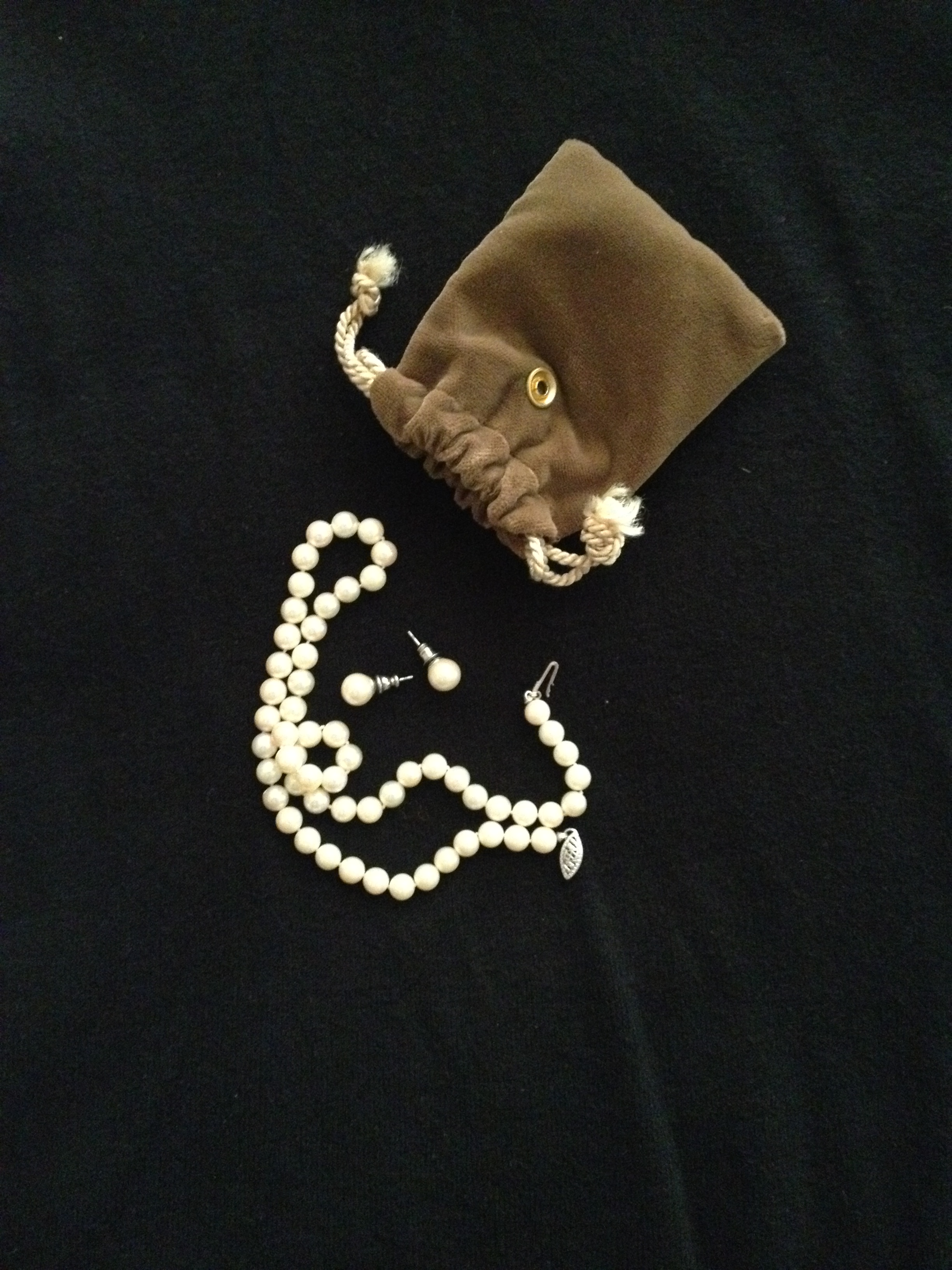
IMG_0560Craig and I were married on August 1, 1970. On our wedding day, he gave me a beautiful strand of matched cultured pearls. It was by far the most valuable jewelry I had ever owned. On our first anniversary, Craig surprised me with matching pearl earrings. I was overcome by his thoughtfulness and I treasured them.

I kept my pearls in a little velour bag and took them out for special occasions. When I received the earrings, I put them in the bag with the necklace. But later, because I wore them more often, I began putting the pearl earrings in a case with my other earrings. Years later, I purchased a  strand of fake pearls that I felt comfortable wearing more often.  I kept the fake pearls in another velour bag in my jewelry case. The fake ones were very nice and looked genuine, but I was always able to tell them apart from my real ones.

On a day in 1985, I wore my pearl earrings to work as I often did as a teacher at Bradshaw Mountain High School.  In the afternoon, when I was preparing to go home, I noticed that one of my earrings was missing. Needless to say, I was devastated. I had lost something of great value–not just because they were real pearls, but because of their importance to me as a gift from my husband.

I looked for that earring nearly every day I walked the campus or spent time in my classroom, but I was never able to find it. A few years later, our high school was moved to a new campus and I had to give up the search for my earring.

Twenty-five years later, I was organizing my jewelry. I removed the strand of pearls from the bag and there was the single earring I had placed in the bag after losing its mate.  I removed the strand of fake pearls from the second bag and out came a single earring. I figured that I had put the earring in the wrong bag, so I placed it in the bag with the real pearls.

A few months later, I planned to wear my pearls.  I dumped them out on the bed. Along with the strand of pearls, came two perfectly matched pearl earrings.

How many times over the course of twenty-five years had I taken those pearls out of their bag? How many times had I looked at that lone earring with a feeling of sadness? Yet here were both earrings. How could that be?

Of course, there are logical explanations. Maybe I only put one earring in that morning. Maybe there had always been one earring in each bag.  Maybe I had just overlooked it for twenty-five years. As someone who believes in miracles, I tend to have as much faith in the improbable as the probable. And so I choose to believe that this treasure of my heart was  returned to me as a gift of love.

“Beth Anne is the hero.”

Beth Anne finished

Beth Anne walked through the tall grass to the edge of the pond. She looked into the pond and saw tiny fishes swimming just under the surface. Dipping her hand into the water, she wiggled her fingers, scaring the fish away. The water felt cold. Continuing on around the pond, she noticed the grass was shorter and there were rocks along the edge. A lizard sat on one of the rocks, sunning itself.  Tiny bugs had landed on the water. Beth Anne wondered if the lizard would try to catch them for food.

After watching the lizard for a few minutes, Beth Anne decided to join her friends on the other side of the pond. She was making her way there, when she noticed a little girl about three years old, splashing her hands in the water. Suddenly, the rock on which the little girl was standing gave way and she fell into the pond. Beth Anne yelled for help. When no one came, she jumped into the pond and pulled the little girl out just as her head was going under water. Amber and Laura finally heard the commotion and came running around the pond. They helped Beth Anne get the little girl out of the water.

“Where is your mom?” Laura asked the little girl when they had her safely away from the pond.

“Over there,” The little girl pointed in the direction of the picnic tables.

As the girls walked toward the picnic tables, the little girl’s mother saw them and came running.

“Why are you all wet?” The mother asked, upset.

“I fell in the pond,” the little girl answered. “She pulled me out.”

“Thank you so much,” the mother said to Laura.

“It wasn’t me,” Laura said. “Beth Anne is the hero.”

“I can’t thank you enough for saving Tiffany. I didn’t even realize she wandered away. If you hadn’t been there, she might have drowned. You really are a hero.”

Since Beth Anne’s clothes were wet, the girls decided it was time to go home. They got on their bikes and rode back to Doris Duncan’s house.

“I’m a hero!” Beth Anne shouted as she ran in the house.

“Why are you wet?” Her Grandmother asked.

“Because I’m a hero,” Beth Anne said again.

“Well, hero or not, you’d better go change your clothes before you catch a cold.”

Just as Laura and Amber were leaving, the doorbell rang. When they opened the door, they found a reporter and cameraman standing on the porch.

“Is this the house where the little girl lives who saved Tiffany McDonald from drowning?” The reporter asked.

“You mean Beth Anne,” Laura said. “I’ll get her for you.” Laura left to get Doris and Beth Anne. Amber stayed at the door with the reporters.

“How did you find out so fast?” Amber asked.

“We were at the park doing a story on the improvement plans the town council is working on. Mrs. McDonald, Tiffany’s mother, came over and told us the story. She pointed you out as you were leaving the park, and we followed you.”

Laura returned to the door with Doris and Beth Anne, who was now wearing dry clothing. “What is this all about?” Doris wanted to know.

“Your granddaughter saved a little girl at the park. She would have drowned if Beth Anne hadn’t pulled her out of the pond. “

“She told me she was a hero,” Doris said, amazed. “But I thought it was just one of her adventure stories. She likes to make up adventures.”

“I’m Veronica Lyons, a reporter for Marshallville Area News. I’d love to interview Beth Anne for tonight’s broadcast.”

Beth Anne went with Veronica and sat down on the sofa in the living room.  While the reporter asked questions, the cameraman filmed the interview.

“What were you doing at the park?” Veronica asked.

“I went there with my friends, Amber and Laura to look for fish in the pond,” Beth Anne said. “I didn’t know there was a little girl by the pond.”

“How did you notice her?” the reporter continued.

“Laura and Amber were looking for . . . What was it?” Beth Anne looked at Laura.

“Crayfish,” Laura said.

“Oh, yeah, crayfish,” Beth Anne went on. “I was walking around the pond. That’s when I saw the little girl. I thought she might get hurt in the pond. Then she fell in. I tried to yell for help but nobody came. Then I went into the water and pulled her out.”

“You are a brave girl,” Veronica said. “Our television station has a reward fund. We’re going to give you twenty-five dollars. What do you have to say about that?”

“I don’t know what to say about that,” Beth Anne said, hesitantly. “I’m happy to get twenty-five dollars. I can help my grandma buy groceries.”

“That’s very sweet of you,” Doris said, “but that’s your money. You should use it to buy something you want.”

“Watch the news tonight at six,” Veronica told them all. “You’re going to be on it.”

From The Handy Helpers: Seven is a Perfect Number  available on amazon

Winter Hiking in Prescott, AZ

IMG_0518Winter is a special time for hiking in Prescott. Cooler temperatures allow longer, less sheltered hikes. Sunny days with temperatures in the upper forties to upper fifties are best, but I’ve hiked when temps were in the thirties.  You soon warm up as you hike along.

Snow creates its own challenges. Recently we hiked the Centennial trail. It is named for the Arizona Centennial and was opened in 2012. We hiked it in September of that year. It was beautiful with flowers still in bloom. This time we hiked it after a snow. The beginning of the trail was muddy, but there were plenty of boulders on both sides of the trail. In most cases we were able to step on the boulders and avoid the mud. As we came around to the north side, the trail was still covered with snow. Making our way up the north face, we tramped through snow most of the way. The snow had melted in some places, leaving  very gooey mud.  In other places it had refrozen into slippery ice flows. At various spots along  the trail we had to cross small streams. Again, strategically-placed boulders provided a way across.IMG_0522

After our climb, we descended into a secluded valley–very mystical and delightful.  After climbing out of the valley–on snow-packed trails of course– we were treated to petroglyphs and magnificent homes in Enchanted Canyon. You can reach this trail off of Gail Gardner Way. Turn onto Westridge and go about a half mile. There is a small parking lot on the right. Then walk along Westridge for about 100 yards to the trailhead.

To avoid the snow and mud, we have elected to hike the trails along Pioneer Parkway and Williamson Valley Road. Many of the trails in that area are part of the Circle Trail that goes all the way around Prescott. You can begin the Legacy trail at Kuebler Field just off of Commerce Drive. Vegetation is sparse in places which makes it great for winter hiking. The trail goes under Pioneer Parkway three times by way of nicely lighted underpasses. There are great views of the Granite Dells, Granit Mountain and Glassford Hill. You can also begin this trail off of Williamson Valley Road. There is a small parking area on the east side of the road just after the intersection with Pioneer Parkway.

IMG_0521The trails around Watson and Willow Lakes are also good choices for winter hikes. Most of the time you will be walking on boulders, and snow melts away quickly there. We usually try to avoid the trails off Walker Road or Senator Highway after a snow, but otherwise they are also good for winter hiking on warmer days.

The important thing is to get out there and hike. Spring is just around the corner and you’ll be ready as the snows melt up north and the flowers begin to bloom.

Making the Most of Lent

IMG_0517Today is Fat Tuesday, the day before Ash Wednesday, which marks the beginning of Lent. It is called Fat Tuesday because it is the last day before beginning a forty-day fast.

Forty days of fasting is significant to Christians.  After receiving the ten commandments, Moses stayed on the mountain with God for forty days and nights without food or drink. Elijah walked forty days and nights to the mountain of the Lord. And most importantly, Jesus spent forty days and nights in prayer and fasting before beginning his public ministry.

From earliest times,  preparing for Easter was practiced in the church. By the time Christianity was legalized in 313 A.D., Lenten practices were well established. Fasting consisted of eating one meal with a few snacks to keep up one’s strength for physical labor. As it is today, abstaining from meat was required on Ash Wednesday and every Friday during Lent.

The purpose of Lent is to prepare for Easter. This involves renewing baptismal vows and repenting of and turning away from sin–in other words, getting right with God. While Lent is largely a Catholic practice, I know many protestants who are recognizing the forty days of Lent as a way to make changes in their lives. Making sacrifices such as giving up something for Lent and helping those in need are also aspects of Lent.

If you try to count the forty days of Lent on a calendar beginning with Ash Wednesday and ending with Good Friday, you will see that it is more than forty days. That is because Sundays are not included in the forty days. Sundays are considered not to be a part of the Lenten responsibilities.  When he was a boy, my husband, whose birthday is March 30, would have to celebrate on Sunday when his birthday fell during Lent. This practice is not done so much today, and those who have given up something for Lent usually continue to abstain even on Sundays.

For me, Lent is an opportunity to deepen my relationship with my savior. This year, I have chosen to read, Rediscover Jesus, an invitation, by Matthew Kelly. I received the book as a Christmas gift from my pastor. The prologue begins with these words:  “OUR GOD IS A GOD OF SURPRISES.” Then it recounts the story of a man named Paul who is trying to get a taxi because he is rushing to catch a plane. In the process of getting the cab, he knocks over a small produce stand belonging to a blind woman. As his friends urge him to get in the taxi, Paul returns to help the woman reset her produce stand. When he is finished, the woman asks Paul a question. She asks him, “Are you Jesus?” When Paul asks her why she thinks he is Jesus, she tells him that when her stand crashed she asked Jesus to help her. Later, Paul asks himself a question, “When was the last time someone confused you for Jesus?”

Coincidentally, the book has forty chapters–one for each day of Lent. The chapters are only a page or two followed by a “Point to Ponder,” “Verse to Live,” Question to consider,” and “Prayer.” In addition, I have signed up to receive daily emails that will help me have the BEST LENT EVER. If this sounds like something you need in your life, you can join me on this journey. Visit DynamicCatholic.com/BestLentEver to receive a free copy of the book and to register for emails.

Don’t just give up chocolate–Make this Lent count. It will change your life.


Then and Now

Scan_20160202When Kirstin was two years old, I was the chairman of Mother’s March for March of Dimes in Chandler, Arizona. The local newspaper sent a reporter to our home to interview me. She asked a lot of questions about raising a special needs child and about what I thought life would be like for us in the future. She took a nice picture of Kirstin and me, sitting on the swings in our backyard.

I had totally forgotten about the experience when, many years later, my cousin, Connie, came across her copy of the article and sent it to me. We were living in Chino Valley, Arizona, by that time, and Kirstin was in high school. Without looking at the article, I passed it to Kirstin, thinking she would enjoy reading it. Several days went by, and Kirstin never said a word about the article. Finally I asked her what she thought about it. After a few awkward moments, she muttered, “I was embarrassed.” Puzzled by her response, I took a look at the article myself. To my horror, I discovered that I had painted a pretty dreary future for our family. I had said that Kirstin would stay with us no matter what; we would never put her in an institution. Even though it might be embarrassing at times, we would keep her with us wherever we went.

The person I was picturing back then had no resemblance to the bright, charismatic charmer who is the adult Kirstin. Had I considered that someday Kirstin would be capable not only of reading the article but of fully understanding what she read, I would never have spoken those words.

Before Kirstin’s birth, I had practically no experience with special needs children. In high school, I had read Angels Unaware, written by Dale Evans, which is about her daughter, who had Down syndrome. She and Roy Rogers raised this daughter at home. It was written from the point of view of the child, who only lived for two years. It greatly moved me, but I never considered that someday I would be the parent of another angel. At the time Dale Evans had her child, parents were being encouraged to put their disabled children in institutions. In fact, in her book, she talks about the institutions being so full that children were placed in foster homes until they could be institutionalized. Doctors told parents it was in the best interest of the family. The special child would be a financial drain and take up so much of the parents’ time that their other children would suffer.

When Kirstin was diagnosed with Down syndrome, the doctor mentioned putting her in an institution as a possibility, but it was not one we ever considered. Nor was it something the doctor expected us to consider. Parents today aren’t given that option at all, because such institutions don’t exist. If families are unable to care for their special needs children, there are generous, loving families eager to adopt. At times, excellent foster families provide appropriate homes where these special children are able to thrive. Adults with special needs remain at home or in group homes as participating members of their communities. This is also the story of how that came about.

I chose to call our book This Little Light of Mine, thinking of the Sunday school song, “This little light of mine, I’m gonna let it shine … Hide it under a bushel? No! I’m gonna let it shine.”

Kirstin does shine in this world. Because she was able to attend school with her peers, students today don’t say, as I did, their experience with special needs children is limited to reading a book. These special students are their friends and classmates. Later in life, they are their customers, employees, and coworkers, and all our lives are better for it. While they do have special needs, they also have special gifts. There is plenty they can teach us in this cynical, dog-eat-dog world. From them we can learn tolerance and patience, which are virtues most of us are weak in. Yes, Kirstin does shine in the world, and she lights it up everywhere she goes.

From the Preface of This Little Light of Mine, A Woman with Down Syndrome Shines Brightly in the World, available at amazon

I LOVE SPINACH

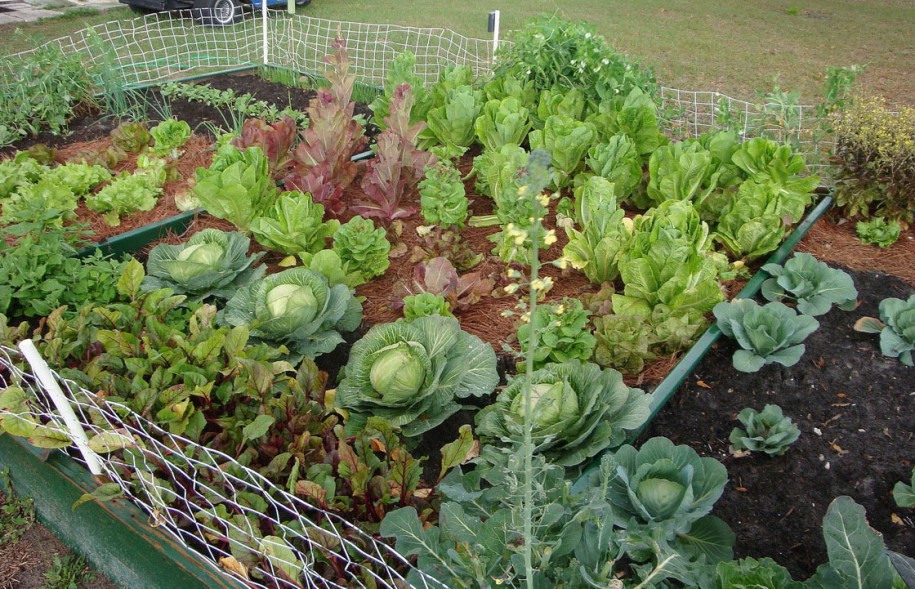
vegetable-garden-ideas2When the grasshoppers ate her mother’s vegetable garden, Amber was secretly happy about it–especially when they ate up all the spinach. Amber couldn’t imagine why anyone would want to eat that slimy green stuff. But when Amber tasted Betty Jenkin’s spinach salad made with fresh spinach, she totally changed her opinion. In fact, when Betty showed up to lend her green thumb in helping the Snyder’s plant a successful garden, Amber insisted that the garden include spinach.

Once the spinach was ready to harvest, Amber wanted to invite Betty to dinner as a way to say thank you. Here is how it went:

Amber was so excited about their special Memorial Day dinner, that she practically dragged her family to the car. “Don’t you want to stay and visit with your friends?” John asked. “It will be hours before Betty comes to dinner.”

“I have to make my special spinach salad,” Amber insisted. “Laura gave me a recipe that she said will be delicious. It’s called Strawberry Spinach Salad. I want to have plenty of time to get things ready.”

Betty Jenkins arrived at the Snyders’ promptly at four o’clock. She brought a jug of homemade lemonade and a cucumber from her garden. “I thought you might like to use this in your salad.” Betty handed the cucumber to Amber.

“That’s exactly what I need,” Amber said, somewhat surprised. “The recipe is supposed to have a cucumber, but I forgot to buy one.”

While her dad got the grill ready for hamburgers, Amber spread the recipe out on the kitchen counter. She took three strips of bacon from the refrigerator and chopped them. Then she cooked the bacon in a small skillet. While the cooked bacon was draining on paper towels, she prepared the dressing using rice vinegar, honey, olive oil, mustard, salt, and pepper. In a large salad bowl, Amber tossed the spinach leaves with slices of oranges and strawberries. Next she added Betty’s cucumber which she had thinly sliced along with some sliced red onion. Just before she was ready to serve the salad, she poured on the dressing, tossing to mix it in well. She divided the salad into individual salad bowls. Then she topped each salad with chopped walnuts and bacon.

As Amber carried her salad out to the patio, she saw her dad taking the hamburgers and corn-on-the-cob off the grill. “Dinner is ready,” he announced. Everyone took a seat around the picnic table in the back yard and John gave the blessing.

“Amber,” Betty said, “your salad is lovely. I’m sure it tastes delicious. Strawberries go so well with spinach.”

“I hope you like it,” Amber said. “I know you make really good spinach salad.”

Everyone was loading their hamburgers with big slices of tomato, onions and lettuce, and unwrapping the corn-on-the-cob. Kyle was the first to taste Amber’s spinach salad. “There’s something different about this salad,” he said. “It’s kind of crunchy.”

“That must be the bacon,” Mary suggested, “or maybe the walnuts.”

“Betty’s cucumber is so fresh,” Amber said. “Maybe that’s what’s crunchy.”

“I see what you mean,” John said to Kyle after taking a bite of salad. “It’s a different kind of crunchy, kind of gritty.”

Mary lifted some of the spinach leaves and examined her salad closely. “Amber, did you wash the spinach before you made the salad?”

“Wash the spinach?” Amber sounded confused. “It didn’t say anything about washing the spinach in the recipe Laura gave me.”

Kyle who had just taken a large bite of salad spit it back into the bowl.

“I should have told you that you have to wash spinach well, especially when it comes from the garden. I’m sorry I didn’t think of that,” Mary said, sympathetically.

“Oh,” Amber said, “I messed up again.”

Mary collected the bowls of salad and carried them into the kitchen.

“I should leave cooking to Laura,” Amber said with a sigh. “I’ll never be a good cook like you, Betty.”

“Well.” Betty laughed. “I wasn’t always a good cook. When Paul and I were first married, I was a horrible cook. I remember the first time I tried boiling eggs. I didn’t know how long to cook them, so I boiled them for half an hour. They were so rubbery you could bounce them off the wall.”

“What did Paul do?” Amber asked. “Did he get mad at you?”

“Not Paul.” Betty laughed again. “He was always a very kind, patient man. He sat right down at the table and ate those eggs—every one. It took him a long time to chew them. It must have been like eating a sponge. I’m sure his jaws hurt for weeks afterwards.”

“That’s a really funny story,” John said. “I think I could tell a few stories like that about when we were first married.”

“But I bet you know better than to tell those stories, don’t you?” Betty said with a wink.

“You have that right.” John laughed.

From The Handy Helpers: Seven is a Perfect Number available on Amazon


Written by Rosemary Heddens